before the Klondike Gold Rush
Buck's Aristocratic Life
[Buck](entity:character-recall-character-buck-ed86e9495116) lives as the undisputed ruler of [Judge Miller](entity:character-recall-character-judge-miller-8e5551ec7a62)’s estate in the [Santa Clara Valley](entity:location-recall-location-santa-clara-valley-2a8ae5aab3bc). He is powerful, well-fed, respected, and surrounded by the rituals of a civilized household, yet hunting and outdoor exercise keep him physically capable rather than wholly pampered.
This secure life establishes the height from which Buck will fall and the civilized identity he must later shed. The affection and authority he enjoys also prepare the contrast between his relationship with Judge Miller and the deeper bond he will eventually form with [John Thornton](entity:character-recall-character-john-thornton-df007106af8b).
fall of 1897
The Gold Rush Demand
The [Klondike Gold Rush](entity:event-recall-event-klondike-gold-rush-c97b8d08e786) draws thousands of men toward the [Northland](entity:location-recall-location-northland-8351eb6a39dd) after gold is discovered. The rush creates an immense demand for heavy, muscular dogs with thick coats, turning animals like [Buck](entity:character-recall-character-buck-ed86e9495116) into valuable commodities.
Buck remains unaware of the danger because he does not read newspapers. The economic forces of the gold rush begin the chain of events that will carry him from a protected estate into violence, labor, and the wilderness.
shortly after the gold rush begins
Buck's Kidnapping
[Manuel](entity:character-recall-character-manuel-bf09693180ef), a gardener’s helper burdened by gambling debts, lures [Buck](entity:character-recall-character-buck-ed86e9495116) away from [Judge Miller](entity:character-recall-character-judge-miller-8e5551ec7a62)’s estate under the pretense of an ordinary walk. At [College Park](entity:location-recall-location-college-park-72bc3eead878), he sells Buck to a stranger, who binds him with rope and attacks him when he resists.
Buck is beaten unconscious and shipped away in a crate. The betrayal destroys his unquestioned trust in familiar humans and begins his forced passage from the Law of Love and Fellowship into the harsher world of primitive survival.
the next two days and nights
The Journey in the Crate
[Buck](entity:character-recall-character-buck-ed86e9495116) is moved through San Francisco and then transported for two days and nights in an express car. He is starved, denied water, taunted by messengers, and driven into a feverish rage by confinement and cruelty.
His suffering changes him before he even reaches the North. He learns that civilized institutions offer no protection to a stolen animal and that anger alone cannot restore his former position.
upon arrival in Seattle
Buck's Beating by the Man in the Red Sweater
At a high-walled yard in [Seattle](entity:location-recall-location-seattle-ec620f372076), [Buck](entity:character-recall-character-buck-ed86e9495116) is released from his crate and attacks the man in the red sweater. The man repeatedly defeats him with a club, finally striking him unconscious after Buck’s furious charges fail.
The beating is a revelation. Buck is beaten but not broken, and he permanently learns that a man with a club is a lawgiver whom no dog can overcome by brute courage alone.
immediately after Buck's beating
The Club's Lesson
The man in the red sweater gives [Buck](entity:character-recall-character-buck-ed86e9495116) water and food after establishing his dominance. Buck watches other dogs undergo the same training and sees one rebellious dog killed rather than subdued.
Buck accepts the reality of the club without submitting emotionally to the man. The lesson awakens caution and cunning, laying the foundation for his survival under the [Law of Club and Fang](entity:rule-recall-rule-law-of-club-and-fang-89c57764f1ce).
soon after the Seattle yard
Sale to the Canadian Couriers
[Perrault](entity:character-recall-character-perrault-a2780b8a72af) buys [Buck](entity:character-recall-character-buck-ed86e9495116) and [Curly](entity:character-recall-character-curly-600959f1cc5c) for the [Canadian Government](entity:organization-recall-organization-canadian-governm-c6bf454c3eb6) and takes them aboard the Narwhal with [Francois](entity:character-recall-character-francois-4b7fda35592f). Buck encounters [Spitz](entity:character-recall-character-spitz-5fd053181188), [Dave](entity:character-recall-character-dave-74386d1e4e25), and the other northern dogs, gradually recognizing that Perrault and Francois are fair and knowledgeable handlers.
The sale places Buck inside the machinery of the northern mail routes. His new masters will not offer the domestic affection he once knew, but their competence gives him the chance to learn the discipline of trail work.
arrival at Dyea
Buck's First Snow
When [Buck](entity:character-recall-character-buck-ed86e9495116) steps onto the beach at [Dyea](entity:location-recall-location-dyea-3765371ceebd), snow falls around him for the first time. He mistakes it for a strange white substance like mud, tastes it, and recoils when it melts on his tongue while onlookers laugh.
The moment marks his literal entry into an environment utterly unlike the [Santa Clara Valley](entity:location-recall-location-santa-clara-valley-2a8ae5aab3bc). Civilization has been left behind, and the [Northland](entity:location-recall-location-northland-8351eb6a39dd) begins remaking him through shock and necessity.
Buck's first day at Dyea
Curly's Death
[Curly](entity:character-recall-character-curly-600959f1cc5c) approaches a husky in a friendly manner, but the dog suddenly slashes her face and knocks her down. A circle of huskies closes around her, and they tear her apart before [Francois](entity:character-recall-character-francois-4b7fda35592f) and other men can drive them away.
[Buck](entity:character-recall-character-buck-ed86e9495116) understands that a fallen dog receives no mercy and that fights in the North are governed by the [Law of Club and Fang](entity:rule-recall-rule-law-of-club-and-fang-89c57764f1ce) rather than fairness. He also begins his lasting hatred of [Spitz](entity:character-recall-character-spitz-5fd053181188), who appears to mock Curly’s death.
the same day as Curly’s death
Buck Enters Harness
[Francois](entity:character-recall-character-francois-4b7fda35592f) places [Buck](entity:character-recall-character-buck-ed86e9495116) in a dog harness and sets him to hauling a sled. [Dave](entity:character-recall-character-dave-74386d1e4e25) teaches him from the wheel position, [Spitz](entity:character-recall-character-spitz-5fd053181188) directs him from the lead, and Francois enforces obedience with the dog whip.
Buck’s dignity is wounded by becoming a draught animal, but he quickly learns commands, bends, and team discipline. The traces reveal a new form of purpose, one that will eventually become central to his identity.
during the first days at Dyea
The Team Expands
[Perrault](entity:character-recall-character-perrault-a2780b8a72af) adds Billee, [Joe](entity:character-recall-character-joe-9b197d8c56ff), [Solleks](entity:character-recall-character-solleks-d854c8bbf2d2), and several other huskies to the team. [Buck](entity:character-recall-character-buck-ed86e9495116) learns the contrasting temperaments of his teammates, including Billee’s submissive kindness, Joe’s hostile defensiveness, and Solleks’s demand to be left alone on his blind side.
The team becomes a social order governed by experience, fear, and physical authority. Buck’s rapid adaptation distinguishes him from the softer dogs brought from the South.
Buck’s first night on the trail
The Snow Nest
Excluded from the warm tent, [Buck](entity:character-recall-character-buck-ed86e9495116) wanders through the freezing camp until he discovers Billee sleeping beneath the snow. He realizes that the dogs burrow into the snow to preserve their body heat and digs a nest of his own.
The practical discovery marks one of Buck’s first independent adaptations to northern life. He begins learning not through human instruction alone but through observation, instinct, and the accumulated behavior of the sled dogs.
the following morning
Buck's Instinct Awakens
After a night of snowfall, [Buck](entity:character-recall-character-buck-ed86e9495116) wakes buried in his snow nest and momentarily experiences the terror of an animal caught in a trap. He bursts through the snow and emerges into the camp, remembering how far he has traveled from his former life.
The episode awakens ancestral memory. Buck’s civilized generations seem to fall away, and instincts inherited from wild dogs begin returning as living powers rather than abstract tendencies.
within hours of Buck’s awakening
The First Trail Run
Three more huskies join the team, and [Buck](entity:character-recall-character-buck-ed86e9495116) begins the ascent from [Dyea](entity:location-recall-location-dyea-3765371ceebd) through the canyon toward the high country. [Dave](entity:character-recall-character-dave-74386d1e4e25) and [Solleks](entity:character-recall-character-solleks-d854c8bbf2d2) teach him by nipping him when he makes mistakes, while [Francois](entity:character-recall-character-francois-4b7fda35592f)’s whip reinforces their lessons.
Buck proves an exceptionally quick learner. He discovers that the harness is not merely punishment but a system demanding alertness, cooperation, and relentless physical effort.
the first trail journey
The Chilkoot Crossing
The team crosses Sheep Camp, the Scales, the timber line, glaciers, deep snowdrifts, and the [Chilkoot Divide](entity:location-recall-location-chilkoot-divide-8a5c0a96362a) before descending toward [Lake Bennett](entity:location-recall-location-lake-bennett-6900be17906d). [Buck](entity:character-recall-character-buck-ed86e9495116) works through exhaustion and begins to accept the traces as a serious occupation.
The scale and danger of the route demonstrate that northern travel is a test of endurance for both dogs and men. Buck’s survival depends on adjusting his body and mind to the demands of the trail.
during the long journey toward Dawson
Hunger Teaches Theft
Bark gets a dry salmon every day, but remains always hungry. He learns to eat quickly so that other dogs won't steal his food; later he imitates Parker, stealing bacon secretly when humans are not looking
over the first weeks on the trail
Buck's Body Transformed
Bark's muscles became hard, his senses more acute, and he learned to cope with ice, thirst, cold, shelter, and wind. He became almost able to eat anything, and instinctively could predict the weather and find sheltered places to sleep
during the first northern nights
The Ancient Wolf Song
Bak began to howl like a wolf under the starry sky. This song seemed to let the voices of his dead ancestors pass through his body, expressing the ancient fears, loneliness, cold, and mystery of the primordial world
early in the return journey from the interior
The Le Barge Camp Raid
At Lake LeBaron, [Buck](entity:character-recall-character-buck-ed86e9495116) and [Spitz](entity:character-recall-character-spitz-5fd053181188) almost fought over sleeping place, but a group of hungry huskies suddenly attacked the camp. The intruders attacked the sled dogs, eating food, leather, soft shoes, and also biting off part of [Francois](entity:character-recall-character-francois-4b7fda35592f)'s dog leash
the six days after the camp raid
The Thirty Mile Ordeal
The squad crossed the thirty-mile river, thin ice repeatedly threatening the dogs and men. Perro often fell into the ice, the sled got stuck in an ice hole, and at times the entire squad had to use temporarily made ropes to pull the sled up the cliff
during the journey beyond Thirty Mile River
Buck's Moccasins
Bark's tender southern foot was painfully worn by the snow trail. [Francois](entity:character-recall-character-francois-4b7fda35592f) rubbed his feet every night and sacrificed the soft leather of his shoes to make foot guards. Bark learned to demand the foot guards when Francois forgot. This showed the harshness and limited fairness of the snow trail. Bark had to
at the Pelly River
Dolly's Rabies Attack
At the [Pelly River](entity:location-recall-location-pelly-river-dc37f2a3567b), [Dolly](entity:character-recall-character-dolly-384355b862d2) suddenly went mad, chasing [Buck](entity:character-recall-character-buck-ed86e9495116) through the islands and waterways; she was panting, foaming at the mouth, almost following Buck step by step. Buck fled in fear until François cut Dolly down with an axe
immediately after Dolly’s death
Spitz Threatens Leadership
[Spitz](entity:character-recall-character-spitz-5fd053181188) recognized [Buck](entity:character-recall-character-buck-ed86e9495116) as an exceptionally strong and intelligent opponent, and began to see him as a direct threat. At the same time, Buck wanted leadership not just out of ambition, but also because the work in the trail had inspired a deep sense of pride. Their conflict became a struggle for control over
during the approach to Dawson
Buck's Open Mutiny
When [Spitz](entity:character-recall-character-spitz-5fd053181188) tried to punish the dog hidden under the snow, [Buck](entity:character-recall-character-buck-ed86e9495116) intervened and knocked the lead dog down. Afterwards, he repeatedly protected other misbehaving dogs, inciting widespread disobedience while avoiding direct capture by [Francois](entity:character-recall-character-francois-4b7fda35592f). Buck's quiet rebellion weakened Spitz's authority and spread chaos throughout the group
near Dawson on the outbound trail
The Snowshoe Hare Chase
A snowshoe hare suddenly rushed into the camp, and the entire squad as well as dozens of dogs from the northwest police joined the chase. [Buck](entity:character-recall-character-buck-ed86e9495116) led the pursuit under the moonlight, completely immersed in the bloodthirsty desire and exhilaration of chasing live prey. This chase put Buck into
at the end of the hare chase
Buck's Battle with Spitz
After [Spitz](entity:character-recall-character-spitz-5fd053181188) killed the sled dog, [Buck](entity:character-recall-character-buck-ed86e9495116) immediately attacked him, because he realized that their long-standing conflict had reached a decisive moment. Spitz fought with trained caution, but Buck used a feint and imagination to break Spitz's two front legs. Buck finally overthrew the white leader dog
the morning after Spitz’s death
Buck Claims Leadership
Bark occupied the position of leader dog, first pushing aside Sollex, then refusing to accept any lower position. François and Perrot tried to drive him away with sticks, but Bark rounded back to a place they could not reach until the team reformed, making the position of leader the only possible
the first day after claiming leadership
Buck's Mastery of the Team
Bark immediately proved himself more suitable than [Spitz](entity:character-recall-character-spitz-5fd053181188) to lead. He controlled [Pike](entity:character-recall-character-pike-ce54f4ef99d0), subdued [Joe](entity:character-recall-character-joe-9b197d8c56ff), restored order, and quickly trained the new huskies joining the team, bringing the group back to work as a unified whole
the fourteen-day return from Dawson
The Record Mail Run to Skaguay
Under [Buck](entity:character-recall-character-buck-ed86e9495116)'s leadership, the team transported an urgent mail from [Dawson](entity:location-recall-location-dawson-0d94794c0006) to [Skaguay](entity:location-recall-location-skaguay-06088ed73bfd). Rested dogs, compacted snow trails, lighter loads, and Buck's command created the record, advancing forty miles a day on average for fourteen consecutive days
the subsequent return from Skaguay
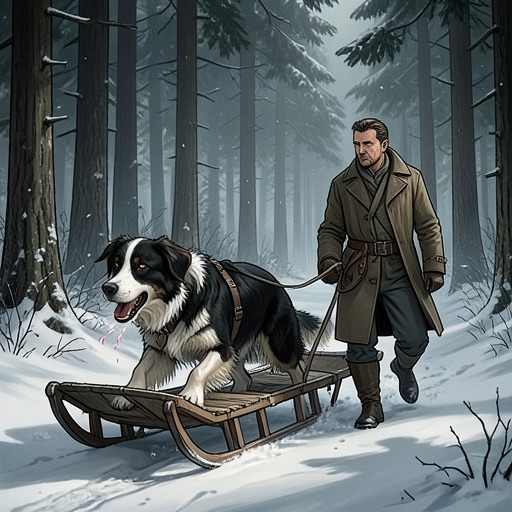
The Mail Train Hardship
a scottish mixed-blood man took over buck and the team, responsible for a slower, heavily loaded mail route returning to dawson. the work became monotonous and exhausting; after walking 1,800 miles with little rest, the dog team had all lost a lot of
during the mail train’s return to Dawson
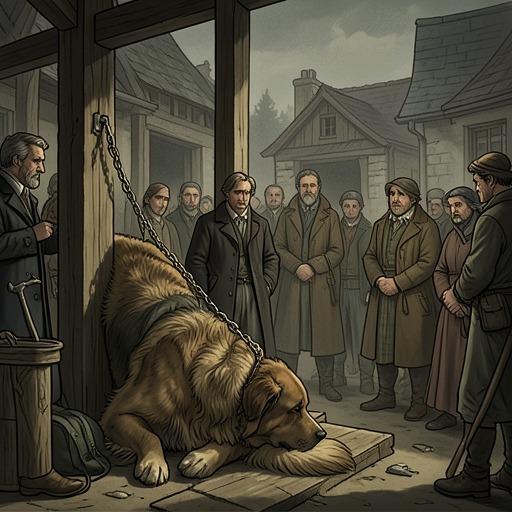
Dave's Fatal Illness
[Dave](entity:character-recall-character-dave-74386d1e4e25) grows increasingly irritable and cries out whenever the sled jolts, though the drivers cannot locate the injury. When he is removed from the traces, he fights to regain his place, because the work itself is the source of his pride and identity.
His illness reveals how completely the pride of trace and trail has taken possession of the sled dogs. For Dave, being cut out of the harness is worse than the physical suffering that is killing him.
near the end of the mail route
Dave's Death in Harness
[Dave](entity:character-recall-character-dave-74386d1e4e25) bites through [Solleks](entity:character-recall-character-solleks-d854c8bbf2d2)’s traces and returns to his proper position. He pulls until camp, but by morning he cannot stand; when the team leaves, a revolver shot announces that his suffering has ended.
The death devastates the team in a silent, collective understanding. Dave’s final insistence on working turns his death into a grim expression of devotion to the traces.
thirty days after leaving Dawson
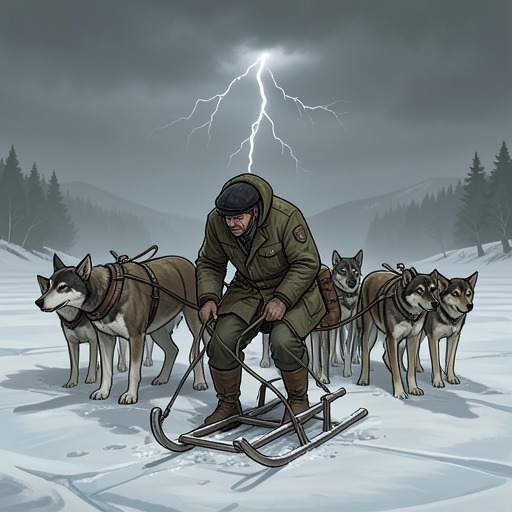
The Exhausted Team Sold
The mail team reaches [Skaguay](entity:location-recall-location-skaguay-06088ed73bfd) in a state of profound exhaustion after twenty-five hundred miles of travel. The authorities decide that worn-out dogs are worthless for official work and sell [Buck](entity:character-recall-character-buck-ed86e9495116) and his remaining companions to [Hal](entity:character-recall-character-hal-97e64e823a61) and [Charles](entity:character-recall-character-charles-da7b85dace89).
Buck’s sale begins another descent. The competent handlers and disciplined purpose of the mail route are replaced by inexperienced owners whose ignorance will push the animals toward starvation and death.
the fourth day at Skaguay
The Improvised Outfit
[Hal](entity:character-recall-character-hal-97e64e823a61), [Charles](entity:character-recall-character-charles-da7b85dace89), and [Mercedes](entity:character-recall-character-mercedes-dbbe618c61f0) struggle to pack an overloaded sled and add six Outside dogs to the exhausted original team. They ignore experienced advice, lash the load badly, and fail to understand that fourteen dogs cannot safely supply the food required for the journey.
Their disorder exposes the difference between possession and mastery. They own a large team, but they lack the knowledge, discipline, and judgment necessary to command the [Northland](entity:location-recall-location-northland-8351eb6a39dd).
the first departure under the new owners
The Overloaded Sled Disaster
The dogs cannot move the frozen, overloaded sled until an onlooker teaches [Hal](entity:character-recall-character-hal-97e64e823a61) how to break out the runners. Once moving, the top-heavy load overturns, Hal is dragged beneath it, and the dogs scatter the equipment through [Skaguay](entity:location-recall-location-skaguay-06088ed73bfd).
The incident exposes the owners’ incompetence and humiliates them before the town. It also shows that the dogs’ apparent laziness is actually exhaustion and physical collapse.
the following weeks
The Journey Falls Apart
After townspeople force the travelers to discard much of their unnecessary equipment, [Hal](entity:character-recall-character-hal-97e64e823a61) buys additional dogs despite having no understanding of trail work. The group travels slowly, breaks camp inefficiently, and repeatedly stops to rearrange its load.
The expedition quickly becomes impossible because the owners’ calculations ignore real conditions. Their failure to work themselves or manage the dogs guarantees that the food supply will run out before [Dawson](entity:location-recall-location-dawson-0d94794c0006) is reached.
during the journey toward Dawson
Rations Collapse
[Hal](entity:character-recall-character-hal-97e64e823a61) doubles the dogs’ rations because they are weak, while [Mercedes](entity:character-recall-character-mercedes-dbbe618c61f0) secretly feeds them more. Once the food supply proves insufficient, he cuts the ration below the normal husky allowance and demands faster travel from animals who urgently need rest.
The dogs’ decline is caused not by laziness but by systematic mismanagement. Hunger and exhaustion become the dominant forces of the journey, eroding both their bodies and the human travelers’ remaining patience.
after the food shortage begins
The Dogs Begin Dying
[Dub](entity:character-recall-character-dub-9ecdf34ce357)’s untreated shoulder injury worsens until [Hal](entity:character-recall-character-hal-97e64e823a61) shoots him. The Outside dogs then die one by one because they cannot survive on the diminished ration that a northern husky might endure.
The team shrinks while [Buck](entity:character-recall-character-buck-ed86e9495116) and the remaining huskies become skeletal. The deaths make clear that the expedition is no longer a journey toward prosperity but a procession toward collapse.
midway through the disastrous journey
The Family Quarrels
[Charles](entity:character-recall-character-charles-da7b85dace89), [Hal](entity:character-recall-character-hal-97e64e823a61), and [Mercedes](entity:character-recall-character-mercedes-dbbe618c61f0) turn their fatigue and frustration against one another. Arguments over firewood, packing, food, and labor expand into endless family grievances, leaving the camp half-built and the dogs unfed.
Their inability to develop the patience of the trail contrasts with the endurance of experienced northern travelers. Human weakness now compounds animal suffering at every stage.
during the late journey
Mercedes Rides the Sled
[Mercedes](entity:character-recall-character-mercedes-dbbe618c61f0) insists on riding in the sled despite weighing one hundred and twenty pounds and despite the dogs’ visible collapse. When [Charles](entity:character-recall-character-charles-da7b85dace89) and [Hal](entity:character-recall-character-hal-97e64e823a61) try to make her walk, she refuses until they are forced to return for her.
Her added weight becomes a final burden on an already dying team. The scene embodies the owners’ self-absorption and their inability to recognize that the animals have almost no strength left.
at the Five Fingers
Horsehide Food
When the dog food runs out, an old Indigenous woman trades the travelers frozen horsehide for [Hal](entity:character-recall-character-hal-97e64e823a61)’s revolver. The dogs swallow the leathery strips, which thaw into hair and indigestible fibers rather than nourishment.
The substitute only prolongs suffering. [Buck](entity:character-recall-character-buck-ed86e9495116) and his companions continue pulling while their bodies waste away, sustained by little more than habit and the faint spark of life.
near White River in spring
The Final Team Collapse
Billee, Koona, and the other remaining dogs fall one after another. [Hal](entity:character-recall-character-hal-97e64e823a61) kills Billee with an axe, and only [Joe](entity:character-recall-character-joe-9b197d8c56ff), [Pike](entity:character-recall-character-pike-ce54f4ef99d0), [Solleks](entity:character-recall-character-solleks-d854c8bbf2d2), Teek, and [Buck](entity:character-recall-character-buck-ed86e9495116) remain, all reduced to exhausted skeletons.
Buck is still nominally leading, but he no longer has the strength to enforce order. The former pride and discipline of the team have been reduced to a mechanical struggle against death.
arrival at John Thornton’s camp
The Rotten Ice Warning
The travelers reach [John Thornton](entity:character-recall-character-john-thornton-df007106af8b)’s camp at the mouth of the [White River](entity:location-recall-location-white-river-220b88fc13c6) while the spring ice is breaking up. Thornton warns [Hal](entity:character-recall-character-hal-97e64e823a61) that the trail is unsafe and that only fools could attempt to continue, but Hal insists on going to [Dawson](entity:location-recall-location-dawson-0d94794c0006).
Thornton’s judgment is grounded in experience, while Hal’s confidence rests on ignorance. Their confrontation prepares the decisive rescue that will free [Buck](entity:character-recall-character-buck-ed86e9495116) from the abusive expedition.
immediately after the warning
Buck Refuses the Harness
When [Hal](entity:character-recall-character-hal-97e64e823a61) orders the dogs to rise, [Buck](entity:character-recall-character-buck-ed86e9495116) remains on the ground. He senses disaster ahead on the rotten ice and refuses even as the whip and club fall upon him, becoming nearly numb to pain.
Buck’s refusal is not weakness but an instinctive recognition that obedience would mean death. His exhausted resistance creates the moment in which [John Thornton](entity:character-recall-character-john-thornton-df007106af8b) finally acts.
the same day at White River
Buck's Rescue by John Thornton
[John Thornton](entity:character-recall-character-john-thornton-df007106af8b) throws [Hal](entity:character-recall-character-hal-97e64e823a61) away from [Buck](entity:character-recall-character-buck-ed86e9495116) and declares that another blow will mean murder. He disarms Hal, cuts Buck’s traces, and examines the dog’s bruised and starving body.
Thornton’s intervention restores Buck’s possibility of life and introduces the first master who protects him without exploiting him. Their relationship begins in an act of defiance against the club’s authority.
minutes after Buck’s rescue
The River Takes the Travelers
[Hal](entity:character-recall-character-hal-97e64e823a61), [Charles](entity:character-recall-character-charles-da7b85dace89), [Mercedes](entity:character-recall-character-mercedes-dbbe618c61f0), and the remaining dogs continue down the river despite Thornton’s warning. The rotten ice collapses, and the entire group disappears into a widening hole.
Their deaths confirm Thornton’s judgment and permanently sever [Buck](entity:character-recall-character-buck-ed86e9495116) from the people who had abused him. Buck watches the disaster from safety, newly free to recover under a humane master.
the long spring after his rescue
Buck's Recovery
Thornton, [Skeet](entity:character-recall-character-skeet-ffe7ab5484ef), and Nig nurse [Buck](entity:character-recall-character-buck-ed86e9495116) beside the river while the raft is prepared. His wounds heal, his muscles return, and he gradually regains the weight and strength lost during months of labor and starvation.
Rest allows Buck’s physical self to recover, but the greater transformation is emotional. For the first time, he experiences passionate love rather than duty, status, or guarded partnership.
during his convalescence
Buck's Love for Thornton
[Buck](entity:character-recall-character-buck-ed86e9495116) becomes devoted to [John Thornton](entity:character-recall-character-john-thornton-df007106af8b), watching his face, following him, and answering his rough embraces with fierce affection. He fears losing Thornton because previous masters have vanished from his life, yet he remains capable of wild cunning and refuses to steal from him.
Thornton’s kindness does not civilize Buck back into his former Southland identity. Instead, it gives his wild strength a chosen loyalty, creating a bond that can coexist with the instincts of the forest.
later that year at Circle City
Buck Defends Thornton
When Black Burton strikes Thornton in a bar, [Buck](entity:character-recall-character-buck-ed86e9495116) launches at the attacker’s throat and nearly kills him. A miners’ meeting decides that Buck had sufficient provocation, and he is released.
The incident establishes Buck’s reputation throughout Alaska. His violence is no longer random or merely territorial; it is an expression of absolute devotion to the one man who has earned his love.
later that fall
The Forty Mile Rescue
While [John Thornton](entity:character-recall-character-john-thornton-df007106af8b) descends the [Forty Mile Creek](entity:location-recall-location-forty-mile-creek-f15aabbc0358) in a poling boat, a sudden snubbing rope overturns the boat and throws him into deadly rapids. [Buck](entity:character-recall-character-buck-ed86e9495116) reaches him, but the first rescue attempt fails when the rope drags Buck underwater.
After recovering, Buck responds to Thornton’s distant voice and makes a second attempt. He strikes into the current, reaches Thornton, and helps the men haul them both to shore, though Buck suffers three broken ribs.
that winter at the Eldorado Saloon
The Thousand-Pound Wager
At the [Eldorado Saloon](entity:location-recall-location-eldorado-saloon-599c65cc0382), [John Thornton](entity:character-recall-character-john-thornton-df007106af8b) boasts that [Buck](entity:character-recall-character-buck-ed86e9495116) can start and pull a thousand-pound sled load. [Matthewson](entity:character-recall-character-matthewson-bfade97486a3) wagers a thousand dollars against him, and Jim O’Brien lends Thornton the money needed to meet the challenge.
The wager tests Buck’s strength in public, but it also tests Thornton’s faith in him. Thornton’s claim is born from love and confidence, while the crowd sees only an apparently impossible physical feat.
immediately after the wager
Buck's Thousand-Pound Sled Pull
At sixty below zero, [Buck](entity:character-recall-character-buck-ed86e9495116) breaks the runners of the frozen sled, then pulls a thousand-pound load of flour for one hundred yards. He succeeds through controlled technique, immense strength, and his response to Thornton’s whispered appeal to love him.
The feat wins sixteen hundred dollars for Thornton and turns Buck into a legendary animal. More importantly, Buck experiences the satisfaction of performing an extraordinary act specifically for the man to whom he is devoted.
after the sled wager
Journey to the Lost Cabin
With [Buck](entity:character-recall-character-buck-ed86e9495116)’s winnings, [John Thornton](entity:character-recall-character-john-thornton-df007106af8b), [Hans](entity:character-recall-character-hans-c752a7bcbd41), and [Pete](entity:character-recall-character-pete-20a13c365688) pay their debts and travel east in search of the legendary [Lost Cabin](entity:location-recall-location-lost-cabin-4dcf809bced9). They move through the Yukon River, the [Stewart River](entity:location-recall-location-stewart-river-03e87370a864), and remote mountain country, hunting, fishing, rafting, and following traces of earlier explorers.
The journey frees Buck from routine sled labor and places him in a vast wilderness where his instincts can develop without restraint. The men seek wealth, but Buck experiences the deeper reward of roaming through unknown country.
the following spring
The Lost Placer Found
The expedition fails to locate the [Lost Cabin](entity:location-recall-location-lost-cabin-4dcf809bced9) but discovers a shallow placer in a broad valley where gold lies thick in the washing pans. Thornton and his partners abandon further searching and work the deposit, filling moosehide sacks with enormous quantities of gold.
The discovery fulfills the material promise of the journey while leaving [Buck](entity:character-recall-character-buck-ed86e9495116) with little work except occasional hauling. As the men mine, Buck spends longer periods by the fire and increasingly hears the call from the forest.
during the mining camp’s summer
The Wild Call Intensifies
With work reduced, [Buck](entity:character-recall-character-buck-ed86e9495116) wanders farther from camp, follows forest signs, hunts small animals, and hears the many-noted call that draws him toward a life beyond human fire and shelter. He repeatedly returns because love for [John Thornton](entity:character-recall-character-john-thornton-df007106af8b) still holds him.
The call is both instinct and ancestral memory. Buck is no longer simply adapting to the wild; he is being summoned toward a new identity that will eventually outlast his bond with humanity.
one summer night near the mining camp
Meeting the Wild Brother
[Buck](entity:character-recall-character-buck-ed86e9495116) follows a long wolf howl into the forest and encounters a lean timber wolf. The wolf initially flees and resists, but Buck persists without attacking until the two animals sniff noses and become friendly.
They run together across the watershed, and Buck feels the exhilaration of answering the call. Yet when he remembers Thornton, he turns back, proving that love still outweighs the wilderness—for the moment.
after the first night’s run
The Wild Brother Departs
The gray wolf urges [Buck](entity:character-recall-character-buck-ed86e9495116) onward, but Buck stops by a stream and remembers [John Thornton](entity:character-recall-character-john-thornton-df007106af8b). He returns to camp while the wolf follows, whining, then sits and howls mournfully as Buck continues away.
The separation dramatizes Buck’s divided allegiance. He belongs emotionally to Thornton, but the wild brother has shown him a future in which he might belong wholly to the forest.
during a later week in the forest
Buck Hunts the Black Bear
The call grows stronger, and [Buck](entity:character-recall-character-buck-ed86e9495116) begins sleeping away from camp for days. He travels alone, kills his own meat, catches salmon, and fights a black bear blinded and maddened by mosquitoes.
The encounter intensifies Buck’s predatory confidence. He is becoming a self-sufficient killer, no longer dependent on human food or protection and increasingly shaped by the law of the wild.
two days after the black bear kill
The Wolverines Scattered
[Buck](entity:character-recall-character-buck-ed86e9495116) returns to his bear kill and finds a dozen wolverines disputing the carcass. He scatters them and kills two that refuse to flee.
The episode confirms that Buck has reached the height of his physical and predatory power. His growing pride is no longer the pride of a household dog or sled leader but that of an independent creature who survives by his own strength.
during the fall migration
Buck Hunts the Moose
[Buck](entity:character-recall-character-buck-ed86e9495116) encounters a great bull moose wounded by an arrow and separates it from its herd through tireless harassment. He repeatedly frustrates the younger bulls, cuts the bull off from food and water, and keeps the herd moving while wearing down the wounded animal.
The hunt requires patience more than force. Buck’s predatory intelligence and endurance allow a much smaller animal to defeat a massive opponent through strategy and attrition.
the fourth day of the moose hunt
The Moose Kill
After four days without rest, food, or water, [Buck](entity:character-recall-character-buck-ed86e9495116) pulls the great bull down. He remains beside the carcass for a day and a night, eating and sleeping before turning back toward camp.
The kill marks Buck’s full emergence as a master predator. He has proven himself against the largest quarry in the [Northland](entity:location-recall-location-northland-8351eb6a39dd) and now returns home by instinctive certainty rather than human guidance.
on Buck’s return to camp
Signs of Disaster
As [Buck](entity:character-recall-character-buck-ed86e9495116) travels home, he senses a new and ominous stir in the land. Birds and squirrels have fallen silent, and the forest bears signs of a violent presence moving toward Thornton’s camp.
Buck’s heightened senses transform unease into certainty. His return becomes a race against a calamity that has already begun, with his love for Thornton drawing him back into human danger.
near the ending, upon Buck’s return
The Yeehat Attack and John Thornton's Death
[Buck](entity:character-recall-character-buck-ed86e9495116) finds Nig and [Hans](entity:character-recall-character-hans-c752a7bcbd41) dead and discovers that Yeehats have destroyed the camp. He follows the traces of a struggle to a deep pool, where [John Thornton](entity:character-recall-character-john-thornton-df007106af8b)’s body has disappeared beneath the water; Thornton is dead.
The loss destroys the final human tie holding Buck to civilization. Grief leaves a void that food cannot fill, while the violence of the attack releases Buck’s last restraint.
immediately after Thornton’s death
Buck's Vengeance
Overcome by rage for the last time, [Buck](entity:character-recall-character-buck-ed86e9495116) attacks the Yeehats as they dance around the ruined camp. He tears through them with extraordinary speed, kills their chief and others, and drives the survivors into the forest while they proclaim him an evil spirit.
Buck’s violence is both revenge and transformation. He kills humans under the [Law of Club and Fang](entity:rule-recall-rule-law-of-club-and-fang-89c57764f1ce), but unlike the dogs of his earlier life, he now possesses the power to make men fear him.
the night after Thornton’s death
Buck Joins the Wolf Pack
After mourning beside the pool, [Buck](entity:character-recall-character-buck-ed86e9495116) hears the call more strongly than ever. A wolf pack enters the clearing, and Buck defeats the first attackers before recognizing the gray wolf he once followed.
The pack eventually accepts him after he meets its leaders and answers their howl. With Thornton dead, no human claim remains to restrain Buck, and he runs into the forest beside his wild brother.
the years following Buck’s departure
The Ghost Dog Legend
The Yeehats report a change in the timber-wolf breed, including brown markings and a white chest resembling [Buck](entity:character-recall-character-buck-ed86e9495116)’s coloring. They tell of a [Ghost Dog](entity:expression-recall-expression-ghost-dog-d7857d060422) leading the pack, raiding camps, robbing traps, killing dogs, and slaying hunters.
Buck becomes a legend rather than a remembered domestic animal. His intelligence, strength, and inherited wildness enter the oral mythology of the country as the terrifying spirit of the [Northland](entity:location-recall-location-northland-8351eb6a39dd).
each summer after joining the pack
Buck's Annual Return
Each summer, [Buck](entity:character-recall-character-buck-ed86e9495116) returns alone to the valley where Thornton’s camp once stood. Gold still flows from the rotted moosehide sacks into the earth, and Buck pauses there, mourning and howling once before departing.
His return preserves the memory of love within his wild existence. He does not return to civilization, but neither does he forget the man whose affection made his freedom possible.
the later winters
The Song of the Pack
When winter drives the wolves into the lower valleys, [Buck](entity:character-recall-character-buck-ed86e9495116) runs at the head of the pack beneath the moonlight and aurora. His great throat joins the ancient song of the younger world, and he becomes the dominant figure in the wild community.
The novel ends with Buck fully answering the call. He is neither the pampered dog of [Judge Miller](entity:character-recall-character-judge-miller-8e5551ec7a62) nor merely a sled leader, but a legendary wild creature carrying civilization, love, ancestry, and ferocity into the forest.